Takeover of the Chicken Bus
Cry MachoThe Takeover of the Chicken Bus is a nighttime emergency in which Mike Milo and Rafo wrest control of a passenger bus from its dangerously drunk driver. Their intervention prevents the driver from continuing along a perilous mountain road, but the decisive turn comes when Rafo, not Mike, gets the bus moving again and takes responsibility for driving. The episode shifts the pair from passengers at the mercy of events to collaborators who must trust one another under pressure.
Background and Escalating Danger
The crisis develops during a bus journey toward Janasco. Its passengers share the crowded vehicle with an assortment of animals and supplies: a pig is hemmed in between seats and large Pemex cans, three hens are kept in a string bag above the aisle, and goats are tethered by a window. Macho, Rafo’s rooster, briefly struts through the bus before settling beneath a seat. The animals’ apparent calm contrasts with the danger that soon overtakes the passengers.
As the road becomes steeper and its turns sharper, the driver pays increasingly more attention to a bottle of tequila than to the route. The bus loses momentum on uphill stretches while the driver struggles to change gears, and it lurches dangerously on the descents. The passengers try to reassure one another with laughter and stories of worse journeys, but their gestures—kissing children, holding crucifixes, and crossing themselves—show how little confidence those efforts can conceal.
By nightfall, the danger has intensified. The driver is completely drunk, and the dark makes the twisting road and its drops still more perilous. His mood shifts into elation: he behaves as if he can master the road and carry the bus through space toward Janasco. His exhilaration does not make him safer; it widens the gap between his confidence and the risk faced by everyone aboard.
Mike and Rafo’s Intervention
Mike quietly communicates a plan to Rafo. Rafo initially gives no sign that he understands, and Mike briefly reads his expression as slowness. He then recognizes that Rafo has grasped the plan but is alarmed by it. That moment complicates Mike’s view of the boy: Rafo’s usual arrogance has not disappeared, but the immediate danger makes his unease visible. He recovers quickly and leaves his seat.
Rafo goes alone to the front of the bus and makes a friendly gesture toward the driver. He stands by the windshield, looking at the headlights on the dark road, until the driver seems no longer to register him. Mike then moves into the empty seat behind the driver. The two take up positions that allow them to act without announcing the plan: Rafo is at the front, while Mike waits behind the driver. When Mike gives the agreed signal, Rafo grabs the steering wheel and holds it to the road as the driver reacts angrily. Mike pulls the emergency brake, bringing the bus to a shaking stop. The passengers cry out, thinking the bus has crashed, and luggage spills from the racks.
The Struggle and Change of Driver
The driver turns on Rafo, and Mike intervenes. A struggle follows between Mike and the driver, who presses the fight even after Mike has brought him down. Mike’s immediate purpose is to take the driver out of control of the situation long enough for him to sober up, rather than to kill him. The encounter leaves Mike occupied with restraining the driver, so the apparent resolution is only partial: the bus has stopped, but no safe driver has yet taken charge.
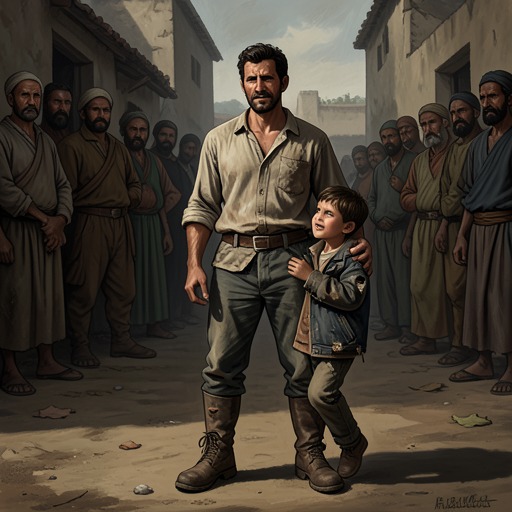
Mike notices that the bus is moving again and at first wonders whether his recurring dizziness is making him misread what is happening. He looks toward the front and sees Rafo driving. The boy keeps his eyes on the road when Mike calls for him to stop, and answers that Mike should not worry. Rafo’s action is more than a continuation of the original plan. He has taken control of the vehicle himself, making a judgment that the passengers need a driver more than they need to remain stopped beside the road.
The passengers’ response changes the atmosphere aboard the bus. An old man begins cheering Rafo, and other passengers join in. Rafo briefly acknowledges their applause with a wave, and the bus veers slightly when he takes his eyes from the road. The cheering registers relief and approval, while the small swerve also makes clear that driving the bus remains a serious responsibility, not a triumphant game. The driver’s eventual permission and grudging approval confirm that Rafo is allowed to drive, though that concession follows rather than initiates the boy’s assumption of control.
Aftermath and Significance
Hours later, toward dawn, Rafo willingly gives the driving over to Mike so he can rest. He does not actually sleep: the drunken driver is snoring in the aisle near him, and Rafo keeps watch. His vigilance shows that the takeover has not erased the danger or his awareness of the man they subdued. Control has shifted, but the journey still requires care.
Rafo privately considers how he and Mike overcame the driver. He can recognize the value of Mike’s plan and his effectiveness in the fight, but resists giving the older man all the credit, insisting in his own thoughts that much of it belongs to him. He also connects the outcome to his Ave Marias. The episode therefore gives Rafo both a practical achievement and a claim to agency: he follows the plan, helps stop the bus, then drives it himself. Mike and Rafo’s cooperation is real, but neither their different contributions nor Rafo’s pride in his own role is dissolved into a simple victory for Mike.
The episode’s central reversal is from helplessness to shared, if temporary, control. At first, the passengers can only brace themselves while the driver’s recklessness governs the road. Mike’s plan interrupts that danger, but it is Rafo who turns the stopped bus into a moving one and earns the passengers’ acclaim. By dawn, he can hand the wheel to Mike by choice. The change does not make the road safe; it shows the two travelers beginning to act as partners in a crisis.